

How To Clean Dark Yellow Spots From Neighbor Using Meth
What are the signs someone has a problem with meth? Well, if they're doing meth, it's most likely a problem.
To be off-white, at that place are certain substances that present every bit addictions that are enjoyed by thousands of individuals who never develop a problem with them. Despite the numbers associated with alcohol — 88,000 people die annual from alcohol-related causes, co-ordinate to the National Institute on Alcohol Abuse and Alcoholism [1] — more than 85 percentage of Americans ages 18 and older report drinking alcohol at some signal during their lifetime.
Weed is another substance that is consumed regularly by many individuals who never develop a problem with it. 1 in 7 adults used marijuana in 2022, according to the news agency Reuters [two], simply only 9 percentage of those people develop a dependence on information technology [3].
Only meth? Meth is a whole dissimilar substance. It's been attributed to varying stages of the overall addiction epidemic in America, but it can be hard to split fact from hysteria, which is disquisitional to agreement information technology. So if you're looking for signs someone has a problem with meth, it'south of import to understand what it is, where it comes from and how it can develop into an addiction.
What Is Meth?
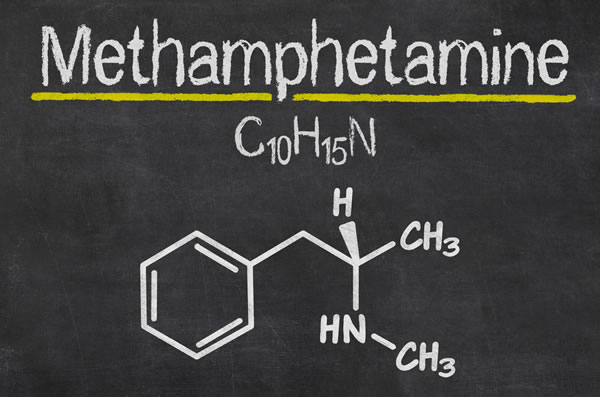 Short for methamphetamine, meth, according to the National Institute on Drug Corruption (NIDA) [four], "is a powerful, highly addictive stimulant that affects the central nervous organization. Crystal methamphetamine is a grade of the drug that looks like glass fragments or shiny, bluish-white rocks. It is chemically similar to amphetamine, a drug used to care for attention-deficit hyperactivity disorder (ADHD) and narcolepsy, a slumber disorder. Other common names for methamphetamine include blue, crystal, ice, meth, and speed."
Information technology'due south of import to distinguish betwixt meth, the drug sought by users and sold illegally on the street, and amphetamines, the chemicals from which it's derived. "Amphetamines are derived from ephedra (Ephedra sinica), a plant native to China and Mongolia," according to the science website Live Science [5]. "The plant contains ephedrine and pseudoephedrine, which are natural alkaloids, or nitrogenous organic compounds that cause a physiological response in humans."
The National Center for Complementary and Integrative Wellness [six] notes that while "people have used ephedra for centuries in People's republic of china for colds, fever, flu, headaches, asthma, nasal congestion, and wheezing," such holistic relief come from the natural properties of the ma huang herb, whose stimulant properties also contributed "to the herb'south effectiveness as an appetite suppressant, especially when combined with caffeine, aspirin or both" [7]. Past isolating those ephedrine properties, Romanaian chemist Lazar Edeleanu first synthesized amphetamine in 1887 at the University of Berlin [viii], and in 1893, Japanese scientist Nagayoshi Nagai used it to synthesize methamphetamine.
(An important note of distinction: Pseudoephedrine, which can be used interchangeably with ephedrine in the manufacture of meth and became a key ingredient in over-the-counter common cold medicines similar Sudafed, was get-go adult in 1889, also by German language chemists. In many instances, American pharmaceutical companies used pseudoephedrine equally the primary ingredient in many of their amphetamine-based and amphetamine-related products.)
According to the website History.com [9], "Methamphetamine was difficult to make until 1919, when another Japanese chemist — Akira Ogata — streamlined the process. He used phosphorus and iodine to reduce the ephedrine into a crystallized course, creating the world's kickoff crystal meth." Ten years later on, American biochemist Gordon Alles discovered the physiological effects of amphetamine, which led to the development of pharmaceutical medications for the treatment of congestion and asthma [5]. "From 1933 to 1948, amphetamine was included in an over-the-counter nasal-congestion inhaler called Benzedrine," the Alive Science article notes. In addition, co-ordinate to History.com [9], "Methamphetamine was used early on as a medical treatment for narcolepsy, asthma and as a weight-loss drug. During Earth War II, the Allies and Centrality powers both used the drug to go on troops awake."
Signs Someone Has a Trouble With Meth: The Post-State of war Boom
 The first meth crisis, co-ordinate to the University of Arizona [eight], took identify following World War II in Nihon, where "former Japanese military warehouses had an abundant amount of the drug in storage and as a upshot, large quantities of over-the-counter methamphetamine pills were produced for domestic consumption by Japanese pharmaceutical companies." In the United States, amphetamines required a prescription, merely by the 1950s, "the prevalence of amphetamine use was on the ascent among civilians, including groups such equally college students, truck drivers, athletes, housewives and individuals performing monotonous jobs."
The Food and Drug Assistants (FDA) banned amphetamine-based inhalers in 1959, but throughout the 1960s, the drug was touted equally "therapeutic agents for health problems such equally hyperactivity, obesity, narcolepsy, and low," and intravenous use by those who discovered its euphoric properties began to increase. At the time, amphetamines were diverted from pharmaceutical companies, and the drug constitute its way into popular culture alongside heroin equally the tragic byproduct of coping with life as a fellow member of the Beat generation.
Notwithstanding, federal efforts in the 1970s targeted those diversions (through the Controlled Substance Act of 1970), and in 1971, co-ordinate to University of Arizona writers, "all forms of methamphetamine were classified equally DEA Schedule II drugs in 1971." Throughout the 1970s and '80s, meth became an underground recreational drug, and the newspaper "The Methamphetamine Problem in the United States," published in a 2022 edition of the Annual Review of Public Wellness [x], lays out a concise timeline of its evolution into the scourge of addiction nosotros know today:
- By the tardily '70s, meth was isolated "to a few circumscribed geographic areas in California and Oregon, where (it) connected to exist manufactured illicitly mostly past motorcycle gangs. Their practice of carrying (meth) in the crankcases of their motorcycles, led to the slang term 'crank.'"
- Gangs began to produce larger amounts in the 1980s and expand their customer base, although use was "fairly limited to Caucasian men, many of whom were truck drivers, construction workers and other blue collar workers."
- Around the same time, a potent form of meth known every bit "water ice" grew in popularity on the island of Oahu, where it was brought over from the Philippines and Southeast Asia: "This crystallized form of (meth) was heated and inhaled equally a vapor and as users discovered the increased intensity of euphoria produced past the smoked drug, smoking became the dominant road of administration for (meth) in Hawaii and subsequently throughout the U.Due south."
- In the 1990s, meth exploded in both homemade labs that began on the West Coast and spread east; during the aforementioned period, Mexican drug cartels set up "superlabs" in Southern California and Northern Mexico, from which meth "was distributed past Mexican drug trafficking groups to key distribution points in the West and Midwest, including Salt Lake City, Oklahoma Urban center and Des Moines."
- From 2000 to 2005, meth became increasingly available in the Southeast, and the government recognized it had a serious problem on its hands. States began passing laws targeting methamphetamine in 2004, and in 2005, the federal government passed the "Combat Methamphetamine Epidemic Act, which federally regulated the sale of products containing pseudoephedrine and further reduced its availability for use in (meth) manufacture."
Signs Someone Has a Problem With Meth: What's That Odour?
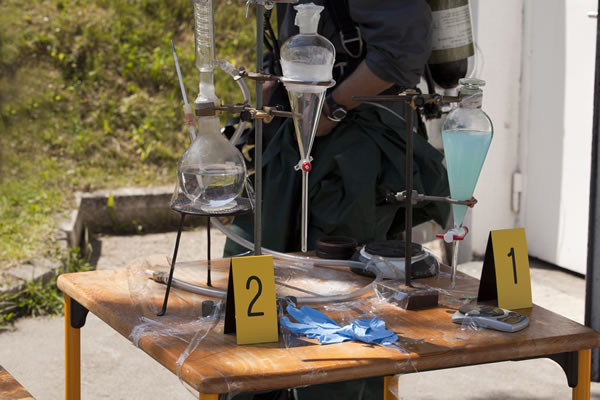 The determination to industry meth, even in the wake of harsher criminal penalties, is a testament to the all-consuming nature of addiction. Although the 2005 federal police force, which was folded into the Patriot Human action, drastically reduced meth manufacturing in the United States, it propagated an explosion of more than "superlabs" south of the border. And because where in that location'southward a will, there's a way, amateur cooks have found plenty of loopholes, legal and criminal, that allow them to go along to brew meth in homemade labs.
It is not, to say the to the lowest degree, the safest of pursuits, and the website How Stuff Works [eleven] breaks downwardly those risks:
- Nigh 6 pounds of toxic material is produced for each pound of meth cooked.
- "Houses used every bit meth labs are oft uninhabitable afterward, and cities and states involved in meth lab busts frequently don't carp with seizing the property, since nobody in their right mind would purchase it at an auction, even at a steep discount."
- "Small meth labs can be found in suburban houses, motel rooms, machine trunks, in campsites or in the forest. Outdoor operations often issue in h2o contamination and a dying-off of nearby vegetation."
- "Crystal methamphetamine (can) be produced by a number of different methods, including scary 'milk shake-and-bake' and 'i-pot' processes. All of them, though, involve ephedrine or pseudoephedrine. The entire process can involve as many as 32 dissimilar chemicals, merely the formula varies past the ingenuity and intelligence of the 'chemists.'"
- Some of those steps involve: Separating the ephedrine/pseudoephedrine from the medications containing it using some sort of solvent; mixing it with red phosphorus and hydriotic acid; filtering out the phosphorous and neutralizing the acid with lye; and ventilating the hydrogen chloride gas used to turn liquid meth into a crystalline table salt.
One time a meth operation is busted, the problem is but starting time: A decade ago, counties around the Southeast faced budgetary shortfalls because they were spending so much money on meth lab cleanups, according to National Public Radio (NPR) [12]: The country of Tennessee solitary spent $4.5 million on the hiring of contractors to clean up and dispose of hazardous waste from meth sites in 2022.
And that, incidentally, is another sign that someone has a problem with meth: the detritus involved in and left over from production. Things to keep an center out for, co-ordinate to the International Association of Certified Home Inspectors [xiii]:
- Equipment used to cook meth: "pressure level cookers, jugs, blenders, aluminum foil, pH test strips, turkey basting wands, rubber gloves, thermometers, funnels, strainers and duct record";
- The odour: "Odors associated with meth labs often smell sweet or bitter, and some people have described it as called-for popcorn. An ammonia smell, similar to that of pet urine, may also exist present."
- Chemical stains on walls and floors, item yellow (iodine) and red (phosphorous);
- Outdoor burn down pits, stained soil or dead vegetation where chemicals may accept been disposed of;
- Rust on hinges, knobs and light fixtures, prove of corrosive gases given off in the cooking process; and
- Unusual venting or plumbing.

Source: https://www.cornerstoneofrecovery.com/crystal-nightmare-what-are-the-signs-someone-has-a-problem-with-meth/
Posted by: gonzalezaustens.blogspot.com
0 Response to "How To Clean Dark Yellow Spots From Neighbor Using Meth"
Post a Comment